
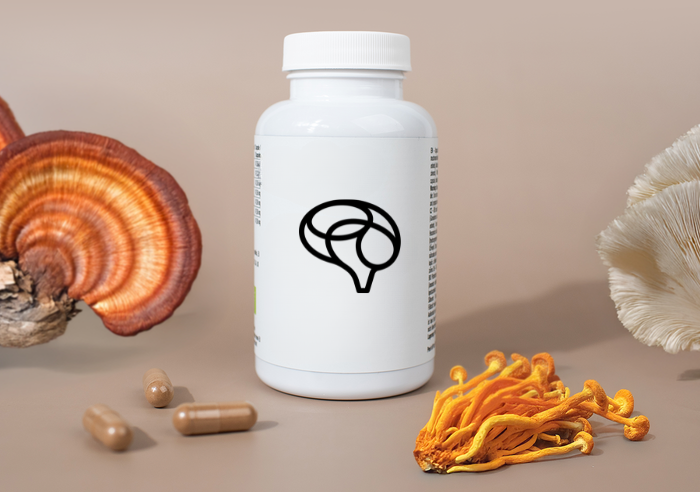
TL;DR: Functional mushrooms are a group of fungi — including Lion’s Mane, Reishi, Cordyceps, Chaga, Tremella, and Agaricus Blazei Murrill — that contain bioactive compounds such as beta-glucans, triterpenes, hericenones, and cordycepin. These species are the subject of ongoing scientific research into their compound profiles and potential applications. Quality extracts standardised to ≥30% beta-glucans deliver the most consistent, measurable levels of these compounds.
What Are Functional Mushrooms?
Functional mushrooms are species of fungi valued not primarily for their culinary use, but for their concentration of bioactive compounds. Unlike the button mushrooms or portobello varieties found in supermarkets, functional species such as Reishi, Lion’s Mane, and Cordyceps have been used for centuries in traditional East Asian practice — and are now the subject of a rapidly growing body of modern scientific research.
The term “functional” refers to the idea that these mushrooms contain compounds of interest beyond basic nutrition. They produce secondary metabolites — polysaccharides, triterpenes, sterols, and other compounds — that are being studied in academic and clinical settings worldwide. For B2B product formulators, understanding the compound profiles of these species begins with two foundational concepts: beta-glucans and species-specific secondary metabolites.
The Role of Beta-Glucans
Beta-glucans are a class of soluble dietary fibres found in the cell walls of fungi, oats, and barley. In mushrooms, the most studied forms are beta-(1,3) and beta-(1,6)-glucans, which have been the subject of extensive research into their interactions with biological systems.
When evaluating a mushroom supplement or extract, the beta-glucan percentage on the certificate of analysis (CoA) is the single most important quality marker. Low-grade products often report “polysaccharide” content rather than verified beta-glucan content — a meaningful distinction, since starch (a non-functional polysaccharide) inflates polysaccharide readings without providing the same compound profile. Standardised extracts at ≥30% beta-glucans, confirmed by third-party testing, represent the current industry benchmark for quality.
Traditional Use and Modern Research
Several functional mushroom species — most notably Reishi and Cordyceps — have a long history of use in traditional East Asian practice. These species have been consumed for centuries and are documented in classical Chinese, Japanese, and Tibetan texts. Modern research is now investigating the specific compounds present in these species to better understand their composition and potential applications.
For product developers working with functional mushroom extracts, the combination of documented traditional use and a growing body of published research provides context for ingredient positioning — provided all commercial language remains compliant with EU Regulation 1924/2006 and no unauthorised health claims are made.
The Six Key Functional Mushroom Species at a Glance
| Species | Key Compounds | Beta-Glucan %* | Extraction Method |
|---|---|---|---|
| Lion’s Mane (Hericium erinaceus) | Hericenones, erinacines, beta-glucans | ≥35% | Hot water |
| Reishi (Ganoderma lucidum) | Triterpenes (ganoderic acids), polysaccharides | ≥20% | Dual (water + ethanol) |
| Cordyceps CS-4 (Cordyceps sinensis) | Cordycepin, adenosine, beta-glucans | ≥32% | Hot water |
| Chaga (Inonotus obliquus) | Betulinic acid, melanin, polyphenols, inotodiol | ≥20% | Hot water |
| Tremella (Tremella fuciformis) | Water-soluble polysaccharides, beta-glucans | ≥45% | Hot water |
| ABM (Agaricus blazei Murrill) | Beta-(1,3)(1,6)-glucans, ergosterol | ≥25% | Hot water |
*Beta-glucan % as verified by third-party CoA testing on FunctionalMushrooms.eu extracts.
Lion’s Mane (Hericium erinaceus)
Lion’s Mane is among the most widely researched functional mushrooms. Its distinctive cascading white fruiting body — resembling a lion’s mane — belies a compound profile unlike any other fungal species. It is increasingly popular in nootropic formulations and functional beverages.
Key Compounds: Hericenones and Erinacines
Lion’s Mane contains two unique classes of bioactive compounds: hericenones (found in the fruiting body) and erinacines (concentrated in the mycelium). Both compound classes have been studied in relation to hericenones and erinacines synthesis — a protein involved in the maintenance and survival of neurons. Erinacines, in particular, are small enough to cross the blood-brain barrier, making them of significant interest to researchers.
In addition to these signature compounds, Lion’s Mane fruiting body extracts contain high concentrations of beta-glucans. Quality extracts standardised to ≥30% beta-glucans ensure that the polysaccharide fraction is present at meaningful levels alongside the hericenones.
What the Research Shows
Research on Lion’s Mane has investigated several areas of interest. A double-masked, placebo-controlled study published in Phytotherapy Research (Mori et al., 2009) found that older adults with mild cognitive impairment who consumed Hericium erinaceus showed significant improvements in compound profile tests compared to placebo, with effects declining after supplementation ceased. Further research is exploring the role of hericenones and erinacines in various biological pathways, though large-scale human trials remain limited. For product developers, Lion’s Mane is best characterised by its unique compound profile of hericenones and erinacines — compounds not found in any other mushroom species.
Reishi (Ganoderma lucidum)
Reishi — known in Chinese tradition as the “mushroom of immortality” or Lingzhi — has the longest documented history of use among functional mushrooms. Records of its use in traditional Chinese practice span over 2,000 years, making it one of the most historically significant fungi in the world.
Key Compounds: Triterpenes and Polysaccharides
Reishi’s bioactive profile is notably complex, encompassing over 400 identified bioactive compounds. The two primary classes of interest are triterpenes (particularly ganoderic acids) and polysaccharides (including beta-glucans). Triterpenes are unique to Reishi among the major functional mushroom species and are responsible for many of its bitter flavour notes — high bitterness in a Reishi extract is often an indicator of good triterpene content. Extracting triterpenes requires an ethanol-based extraction, which is why a dual-extraction process (water and ethanol) is considered optimal for full-spectrum Reishi extracts.
What the Research Shows
Reishi has been widely studied, with research focusing on characterising its triterpene and polysaccharide fractions and their interactions with biological systems. Ganoderic acids in particular have attracted significant academic interest due to their structural complexity, with over 130 distinct ganoderic acid variants identified to date. The polysaccharide fraction, rich in beta-glucans, is also the subject of ongoing study. For supplement brands, Reishi is most accurately described by reference to its uniquely complex compound profile — particularly its triterpene content, which distinguishes it from all other functional mushroom species.
Cordyceps (CS-4 Strain)
Cordyceps occupies a unique position among functional mushrooms. The CS-4 strain — a fermentation-derived strain of Cordyceps sinensis — is the most clinically studied form and provides a sustainable, vegan alternative to wild-harvested Cordyceps, which is derived from parasitised caterpillars and is prohibitively expensive at scale.
Key Compounds: Cordycepin and Adenosine
The two most studied compounds in Cordyceps are cordycepin (3′-deoxyadenosine) and adenosine. Cordycepin is a nucleoside analogue that has attracted substantial research interest due to its structural similarity to adenosine, differing only in the absence of a hydroxyl group. Adenosine itself is a naturally occurring nucleoside involved in cellular energy transfer via ATP synthesis. Together, these compounds form the distinctive biochemical signature of Cordyceps extracts. The CS-4 strain has been specifically validated for cordycepin content through multiple studies.
What the Research Shows
Cordyceps CS-4 has been studied in various research contexts. Published studies have characterised the cordycepin and adenosine content of CS-4 extracts and investigated their interactions with cellular energy pathways. The species has a documented history of traditional use in Tibetan and Chinese practice. For sports nutrition and active lifestyle brands, Cordyceps is characterised by its unique cordycepin and adenosine profile — compounds that distinguish it from other functional mushroom species. All commercial claims must remain compliant with EU Regulation 1924/2006.
Chaga (Inonotus obliquus)
Chaga is a parasitic fungus that grows predominantly on birch trees across boreal forests in Siberia, Scandinavia, Canada, and northern China. Unlike other functional mushrooms, Chaga does not produce a conventional fruiting body. What is harvested is a sclerotium: a dense, carbonised mass of fungal tissue that protrudes from the tree bark. This unusual growth form gives Chaga its distinctive black exterior and concentrates a remarkable array of compounds.
Key Compounds: Betulinic Acid and Melanin
Chaga’s most distinctive compound is betulinic acid, a pentacyclic triterpene derived from the birch tree host and incorporated into the fungal tissue during growth. Betulinic acid has attracted significant research interest in academic settings. Chaga also contains inotodiol, lanosterol, and ergosterol (a precursor to vitamin D2), alongside one of the highest concentrations of melanin pigments found in any natural substance — melanin being the compound responsible for Chaga’s black exterior. Additionally, Chaga contains a complex profile of polyphenols, which contribute to its high ORAC (Oxygen Radical Absorbance Capacity) values in laboratory testing. Beta-glucans are present in Chaga, though at lower concentrations than in many other functional species; quality extracts compensate by standardising to the whole-extract polysaccharide fraction.
What the Research Shows
Chaga has been studied primarily for its compound composition, with researchers characterising its betulinic acid, melanin, and polyphenol fractions. In vitro studies have analysed the free radical scavenging capacity of Chaga extracts, and published ORAC values place it among the highest-scoring natural substances tested. However, human clinical data remains limited. For supplement brands, Chaga is most accurately characterised by its unique combination of betulinic acid, melanin, and polyphenols — a compound profile distinct from other functional mushroom species — and its long history of traditional use in Siberian folk practice.
Tremella (Tremella fuciformis)
Tremella — the snow fungus or silver ear mushroom — is arguably the most underappreciated species in the Western functional mushroom market. Yet, it holds a prominent place in traditional Chinese beauty and longevity traditions. Its semi-translucent, gelatinous fruiting body is the visible expression of its defining characteristic: an exceptionally high concentration of water-binding polysaccharides.
Key Compounds: Water-Soluble Polysaccharides
Tremella’s primary bioactive compounds are its water-soluble polysaccharides, which have an unusual molecular structure that confers exceptional water-retention capacity. Research suggests that Tremella polysaccharides may hold up to 500 times their own weight in water — a property that has drawn comparisons to hyaluronic acid in the cosmetic and nutricosmetic industries. Unlike hyaluronic acid, Tremella polysaccharides have a smaller particle size. They also exhibit beta-glucan content, contributing to the broader polysaccharide profile shared across functional mushroom species.
What the Research Shows
Research on Tremella polysaccharides has focused primarily on characterising their molecular structure and water-binding properties. Studies published in journals including the International Journal of Biological Macromolecules have analysed the polysaccharide composition and water-retention characteristics of Tremella extracts, in both topical and oral application contexts. For brands in the nutricosmetic or beauty-from-within categories, Tremella is characterised by its unique water-soluble polysaccharide profile and exceptionally high beta-glucan content (≥45%).
Agaricus Blazei Murrill (ABM)
Agaricus Blazei Murrill (ABM) — also known as the Brazilian sun mushroom or cogumelo do sol — was discovered in the Piedade region of Brazil in the 1960s and has since become one of the most widely studied functional mushrooms in Japan. Its powerful beta-glucan profile and relatively approachable flavour have made it a popular choice in supplement formulations.
Key Compounds: Beta-(1,3)(1,6)-Glucans
ABM contains one of the highest concentrations of beta-(1,3)(1,6)-glucans found in any commercially available mushroom species. These branched polysaccharides are the most studied form of beta-glucan in mushroom research. ABM also contains ergosterol (a vitamin D precursor), agaritine, and various lectins, though beta-glucans remain the primary functional compound of commercial interest. The structural complexity of ABM’s beta-glucan chains — featuring a high degree of branching — distinguishes them from the more linear glucan structures found in other species.
What the Research Shows
ABM has been studied in both in vitro and clinical settings, with a substantial body of Japanese research examining its compound profile and beta-glucan content. Published studies have characterised ABM’s polysaccharide fractions and analysed its ergosterol content, including its potential as a natural source of vitamin D precursors. For supplement brands, ABM is most accurately characterised by its exceptionally high beta-(1,3)(1,6)-glucan concentration and its well-documented compound profile. All commercial claims must comply with EU Regulation 1924/2006.
How to Choose a Quality Functional Mushroom Extract
The functional mushroom supplement market has expanded rapidly, and quality varies enormously between products. Understanding two fundamental quality markers — the source of the extract (fruiting body versus mycelium) and the information disclosed on a certificate of analysis — will enable both brands and consumers to make informed, evidence-based purchasing decisions.
Fruiting Body vs Mycelium
This is the most important distinction in quality in the functional mushroom industry. The fruiting body is the visible mushroom structure — the part traditionally harvested and used in traditional practice. Mycelium is the root-like network of fungal threads, which is typically cultivated on grain substrates such as oats or brown rice in commercial production.
The issue with mycelium-based products is not mycelium itself, but the substrate it is grown on. When mycelium is grown on grain and the resulting biomass is dried and powdered without separation, the final product may contain a significant proportion of starch from the grain substrate. This starch inflates polysaccharide readings on basic testing, creating the false impression of high bioactive content. Reputable suppliers use fruiting body extracts or clearly specify their extraction method and actual beta-glucan content — not total polysaccharides — on the CoA. Always ask for or verify the beta-glucan figure specifically.
What to Look for on a Certificate of Analysis
A credible certificate of analysis for a functional mushroom extract should include the following verified parameters:
- Beta-glucan percentage — tested by a recognised method (e.g., Megazyme assay), not estimated
- Heavy metals panel — arsenic, cadmium, lead, and mercury, with results below EU regulatory limits
- Microbial testing — total plate count, yeast and mould, E. coli, Salmonella
- Pesticide screening — particularly relevant for wild-harvested or imported species
- Identity confirmation — HPTLC or DNA barcoding to confirm species identity
- Extraction method and solvent disclosure — water, ethanol, or dual extraction
Third-party testing — conducted by an accredited laboratory independent of the manufacturer — is the gold standard. Any supplier unwilling to provide a third-party CoA on request should be treated with caution.
Common Mistakes When Buying Mushroom Extracts
- Choosing polysaccharide content over beta-glucan content. Total polysaccharides include starch, which provides no functional benefit. Always look for a verified beta-glucan figure — not just “polysaccharides.”
- Not checking whether the product uses fruiting body or mycelium. Many products marketed as mushroom supplements contain myceliated grain with little to no verified mushroom content. Look for “fruiting body extract” or a clear CoA with beta-glucan ≥30%.
- Assuming all extracts are equivalent. A 10:1 extraction ratio means nothing without knowing the starting material quality and what the concentrate has actually been standardised to. Standardisation to a specific compound (e.g., ≥30% beta-glucans) is far more meaningful than an extraction ratio.
- Overlooking extraction method for Reishi. Reishi’s triterpene content requires ethanol extraction. A water-only Reishi extract will have negligible triterpene content, regardless of how it is labelled. Dual extraction is essential for full-spectrum Reishi.
- Selecting the lowest-cost option without verifying quality markers. Mushroom extracts are priced according to quality, potency, and testing rigour. Significant undercutting on price relative to the market is almost always reflected in the CoA — or in its absence.
Frequently Asked Questions
What are functional mushrooms?
Functional mushrooms are fungal species — including Lion’s Mane, Reishi, Cordyceps, Chaga, Tremella, and Agaricus Blazei Murrill — valued for their bioactive compounds such as beta-glucans, triterpenes, hericenones, and cordycepin. These compounds are the subject of ongoing scientific research.
What is the difference between functional mushrooms and culinary mushrooms?
Culinary mushrooms such as button, portobello, and shiitake are primarily consumed for their flavour and nutritional value. Functional mushrooms are selected specifically for their concentration of bioactive compounds — including beta-glucans and species-specific molecules like hericenones or ganoderic acids — that are the subject of scientific research beyond basic nutrition.
What does beta-glucan percentage mean on a mushroom extract label?
Beta-glucan percentage indicates the proportion of the extract that consists of verified beta-(1,3)(1,6)-glucan polysaccharides — the primary compounds of interest in functional mushroom research. A ≥30% beta-glucan figure, confirmed by third-party testing, indicates a high-potency, standardised extract with meaningful levels of these compounds.
Which functional mushroom has the most unique compound profile?
Each species has a distinctive compound profile. Lion’s Mane (Hericium erinaceus) is the only species known to contain hericenones and erinacines. Reishi contains over 130 ganoderic acid variants. Cordyceps is characterised by cordycepin and adenosine. Chaga contains betulinic acid and high concentrations of melanin. The choice of species depends on the specific compounds of interest for a given formulation.
Can you combine multiple functional mushroom extracts in one formulation?
Yes. Combining functional mushrooms is common practice and the basis of many multi-mushroom formulations. Different species offer complementary compound profiles — for example, Lion’s Mane contributes hericenones and erinacines, Cordyceps provides cordycepin and adenosine, and Reishi supplies triterpenes. No significant negative interactions between functional mushroom species have been reported in the literature.
Explore Our Functional Mushroom Extracts
FunctionalMushrooms.eu supplies certified functional mushroom extracts at ≥30% beta-glucans (third-party tested) to supplement brands, manufacturers, and retailers across Europe. Our range includes Lion’s Mane, Reishi, Cordyceps CS-4, Chaga, Tremella, and Agaricus Blazei Murrill — all backed by full documentation, including third-party CoAs, heavy metals panels, and microbial testing.
Whether you are formulating a new product line, sourcing ingredients for an existing range, or exploring white label mushroom supplements, we offer flexible minimum order quantities and dedicated technical support. Explore our wholesale mushroom extracts and request a sample or full specification pack today.
Find a Supplier in Your Country
We supply mushroom extracts across Europe with full regulatory documentation:
- Lion’s Mane Supplier Germany
- Lion’s Mane Supplier Netherlands
- Lion’s Mane Supplier UK
- Reishi Supplier Germany
- Cordyceps Supplier Germany
Disclaimer: No EFSA-authorised health claims currently exist for any mushroom species referenced in this article. The information provided is for B2B formulation reference and does not constitute a health claim under EU Regulation 1924/2006.